
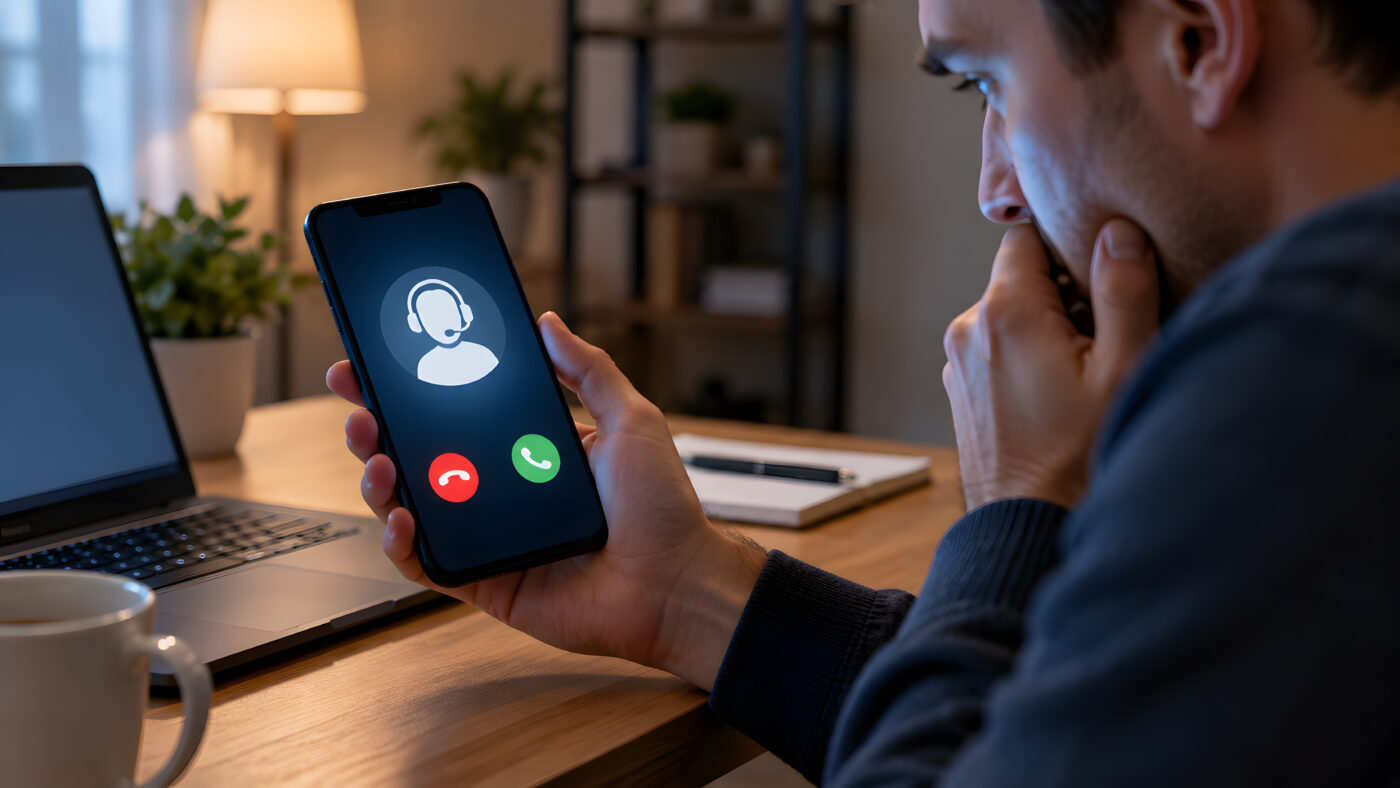
Helpdesk impersonation, also known as Fake IT Support scams, has rapidly become one of the most damaging and fast‑growing forms of social engineering targeting businesses today. These attacks exploit trust, urgency, and confusion, allowing cybercriminals to pose as IT support personnel, managed service providers (MSPs), software vendors, or helpdesk technicians. Their goal is simple: gain access to your systems, credentials, or sensitive information.
Help desk scams often begin with unsolicited phone calls, emails, text messages, or remote support requests. Attackers may claim your account is compromised, your device is infected, or your company’s systems require immediate action. The goal is to push you into bypassing normal security procedures before you have time to think.
Why Help Desk Impersonation Is Surging
Recent industry reporting shows a dramatic rise in help‑desk‑focused social engineering. According to Trusona’s 2026 analysis, vishing (voice phishing) attacks increased 442% from the first to the second half of 2024, with help desks identified as a primary target.
Attackers have shifted from “breaking in” to “signing in”and the help desk is often the easiest place to manipulate identity controls.
Voice phishing campaigns against help desks and employees are now a major component of modern credential‑theft operations, according to reporting from Verizon, Microsoft, Google Cloud, the FBI, and the FTC.
The takeaway: attackers are increasingly targeting the human layer of IT support because it gives them direct access to accounts, authentication resets, and remote access pathways.
How Help Desk Scams Work
Help desk impersonation attacks typically follow a predictable pattern:
- Unsolicited contact claiming to be from IT support
- Requests for passwords, MFA codes, or authentication prompts
- Pressure to install remote access software
- Claims of urgent compromise requiring immediate action
- Attempts to bypass verification procedures
These tactics are designed to create panic and override your normal security instincts.
The Scale of Impersonation Fraud
Help desk scams are part of a broader impersonation problem affecting businesses and consumers alike. Federal agency data compiled in 2026 shows that brand impersonation is one of the most pervasive forms of fraud reaching American consumers and small businesses, with attackers creating lookalike domains, spoofed support portals, and fake customer‑service accounts.
Why These Attacks Work
Help desk impersonation succeeds because it exploits trust in internal IT teams; urgency created by fake security alerts; identity gaps in verification processes; and human nature (people want to resolve problems quickly).
Even organizations with strong technical defenses remain vulnerable if employees are pressured into approving fraudulent MFA prompts or granting remote access.
How to Protect Your Organization
1. Verify Every Unexpected Support Request
Always confirm through a known, trusted contact method — never through the phone number or link provided by the caller.
2. Never Share Passwords or MFA Codes
Legitimate IT support will never ask for your password or MFA code.
3. Do Not Install Remote Access Software Unless You Initiated the Request
Remote access tools are powerful and dangerous in the wrong hands.
4. Slow Down and Validate
Attackers rely on urgency. Taking 30 seconds to verify can prevent a breach.
5. Report Suspicious Communications Immediately
Early reporting helps your organization respond quickly and prevent escalation.
The Bottom Line
Help desk impersonation scams are increasing in frequency, sophistication, and financial impact. They exploit human trust and operational urgency, making them one of the most dangerous forms of social engineering facing businesses today.
If you ever receive a suspicious call, email, or support request claiming to be from WCA Technologies, contact our helpdesk directly through your established support channels. Verification is your best defense.
